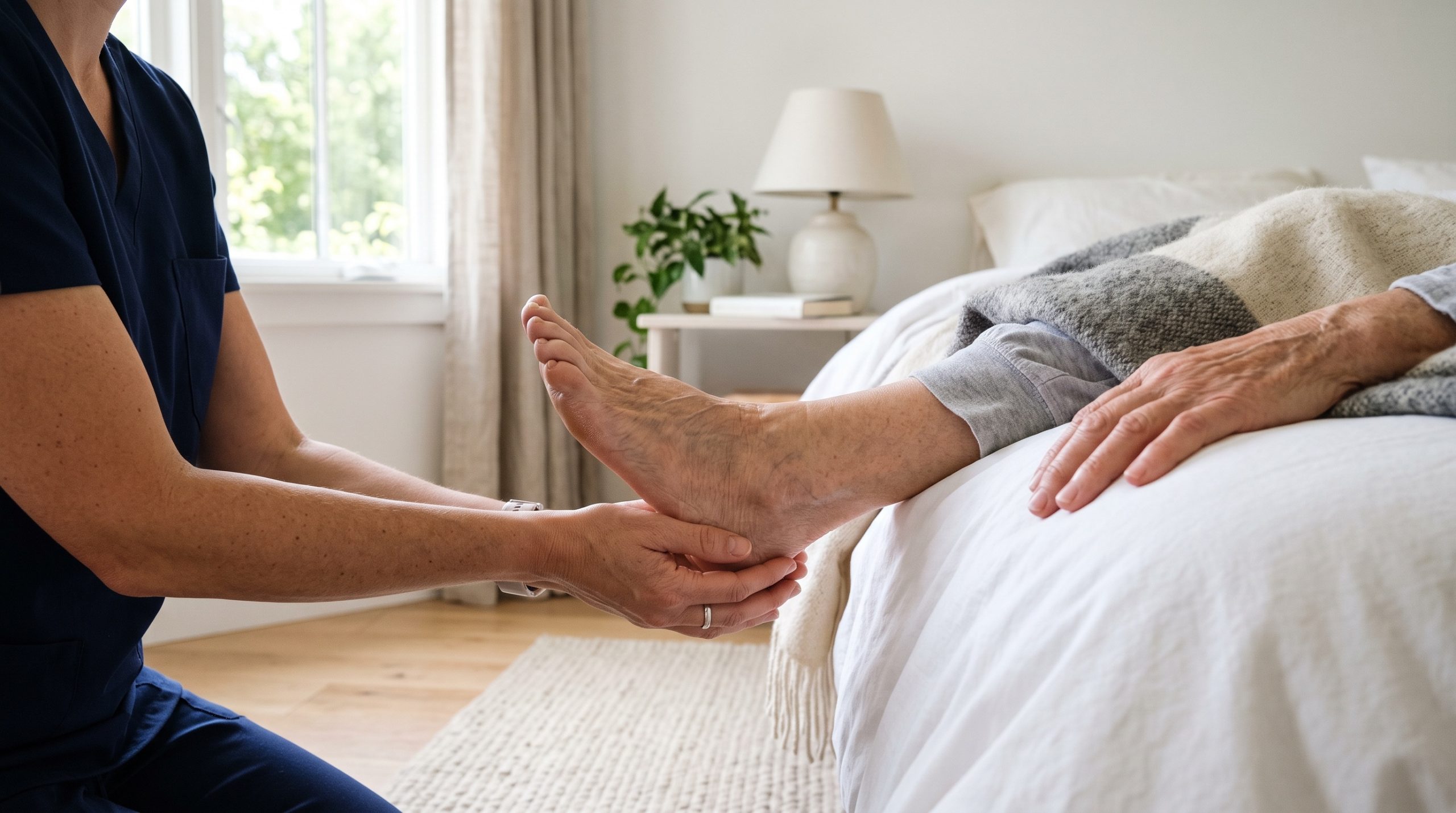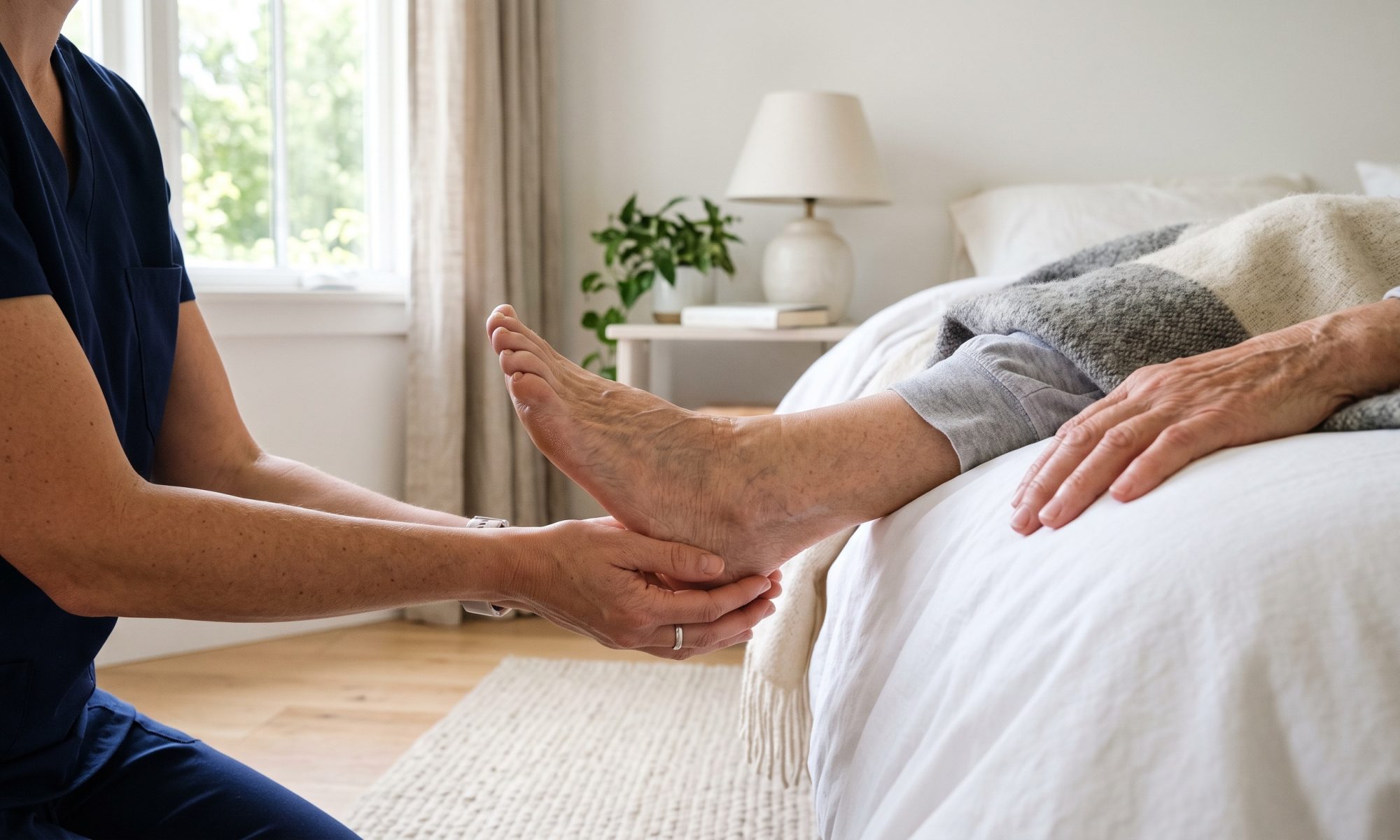
Foot care matters in home care because the feet are often the first place where bigger health issues show up, from poor circulation to balance problems that lead to falls. For older adults who spend most of their day at home, small foot problems can escalate quickly if no one is checking for them. This guide breaks down why foot care deserves more attention and what families can do to make it part of everyday routines.
Why Do Feet Deserve Special Attention in Home Care?
The feet carry the full weight of the body every day, yet they’re often the last thing anyone thinks to check. In a home care setting, caregivers are uniquely positioned to notice changes a family member might miss during a quick visit.
- Feet are farther from the heart, so circulation issues often appear there first.
- Reduced mobility makes it harder for seniors to inspect their own feet.
- Thickened toenails, calluses, and dry skin can go unnoticed under socks and shoes for weeks.
What Foot Problems Are Most Common among Seniors at Home?
Aging skin, slower healing, and years of wear all contribute to foot issues that become more frequent later in life. Recognizing these patterns helps caregivers catch problems early.
- Dry, cracked skin – Reduced oil production makes the skin on the feet more prone to cracking, which can create entry points for infection.
- Toenail changes – Thickened, discolored, or ingrown nails are common and can make walking uncomfortable.
- Swelling – Fluid buildup in the lower legs and feet can signal circulation or heart-related issues.
- Numbness or tingling – Often linked to nerve changes, this can affect balance and increase fall risk.
How Does Foot Health Affect Balance and Fall Risk?
Balance depends heavily on sensation in the feet. When nerve function or foot structure changes, the brain receives less accurate information about the ground beneath it. This disconnect is one of the most overlooked contributors to falls among older adults living at home. Ill-fitting shoes, calluses, or undiagnosed nail problems can further throw off a person’s gait, making everyday movements like walking to the bathroom or navigating stairs riskier than necessary.
What Can Caregivers Do to Support Daily Foot Care?
Simple daily habits go a long way toward preventing bigger problems down the road. Caregivers don’t need special training to make a meaningful difference.
- Wash and thoroughly dry feet daily, paying close attention to the spaces between toes.
- Apply moisturizer to prevent cracking, avoiding the areas between toes where excess moisture can lead to fungal growth.
- Trim toenails straight across to prevent ingrown nails.
- Check for redness, swelling, cuts, or blisters during regular routines.
- Ensure shoes fit properly and provide adequate support.
Some seniors only require help with a few daily tasks so they can maintain their independence. However, those living with serious illnesses may need more extensive assistance. Luckily, there is professional 24-hour care Libertyville seniors can rely on. Home can be a safer and more comfortable place for your loved one to live with the help of an expertly trained and dedicated around-the-clock caregiver.
Why Should Families Make Foot Checks Part of the Home Care Routine?
Regular foot checks catch small issues before they become painful or disruptive. Because seniors in home care may not always report discomfort, especially if their sensation is diminished, a caregiver’s routine observation often becomes the primary safeguard. Building foot checks into an existing routine, such as after a bath or before bed, makes the habit sustainable without adding an extra burden to the day.
Aging adults who require assistance with the tasks of daily living can benefit from reliable home care service Libertyville families can trust. Assisting Hands Home Care Libertyville provides families with the high-quality care their elderly loved ones need and deserve. Our caregivers are trained to help seniors prevent and manage serious illnesses and encourage them to make healthier decisions as they age.
Living independently is important for seniors who want to maintain a high quality of life. For some, this simply means receiving help with tasks that have become more challenging to manage over time. Even when families have the best intentions, they may not have the time to provide the care their elderly loved ones need and deserve. If your loved one needs help to age in place as independently as possible, reach out to Assisting Hands Home Care, a trusted provider of respite, 24-hour, and overnight care Libertyville seniors can depend on. Call Assisting Hands Home Care today to learn about our high-quality in-home care services.
Frequently Asked Questions
How often should a caregiver check an older adult’s feet?
+
Daily checks are ideal, especially during regular routines like bathing or dressing, since this makes it easier to catch changes early.
What are the warning signs of poor foot circulation?
+
Cold feet, pale or bluish skin color, numbness, and slow-healing sores are all signs circulation may be compromised.
Can dry skin on the feet lead to bigger problems?
+
Yes, cracked skin can create openings that allow bacteria or fungi to enter, so keeping feet moisturized is an important part of daily care.
Why do older adults often have thicker toenails?
+
Nail growth slows with age and circulation changes, which can cause nails to thicken and become harder to trim safely.
What type of footwear is best for seniors in home care?
+
Shoes with supportive soles, a secure fit, and enough room for the toes to move freely reduce pressure points and increase stability.