Table of Content
- 1 How Do Pill Organizers and Dispensers Enhance Medication Accuracy?
- 2 How Can Technology Be Used to Remind Seniors to Take Medications?
- 3 Why Is Keeping a Detailed Medication List Important for Safety?
- 4 How Does Using One Pharmacy Prevent Dangerous Drug Interactions?
- 5 What Are the Best Practices for Safe Medication Storage and Disposal?
- 6 Frequently Asked Questions
The best ways to manage medications for seniors at home include using organized pill systems, setting reliable reminders, maintaining an updated medication list, working with one pharmacy, and practicing safe storage and disposal. Managing multiple prescriptions can be a complex and overwhelming task for older adults and their caregivers, increasing the risk of missed doses or accidental overdoses. Establishing a consistent, organized routine is essential for maintaining your senior loved one’s health and preventing dangerous drug interactions. By implementing a few practical strategies, you can ensure safety and provide peace of mind for everyone involved.
How Do Pill Organizers and Dispensers Enhance Medication Accuracy?
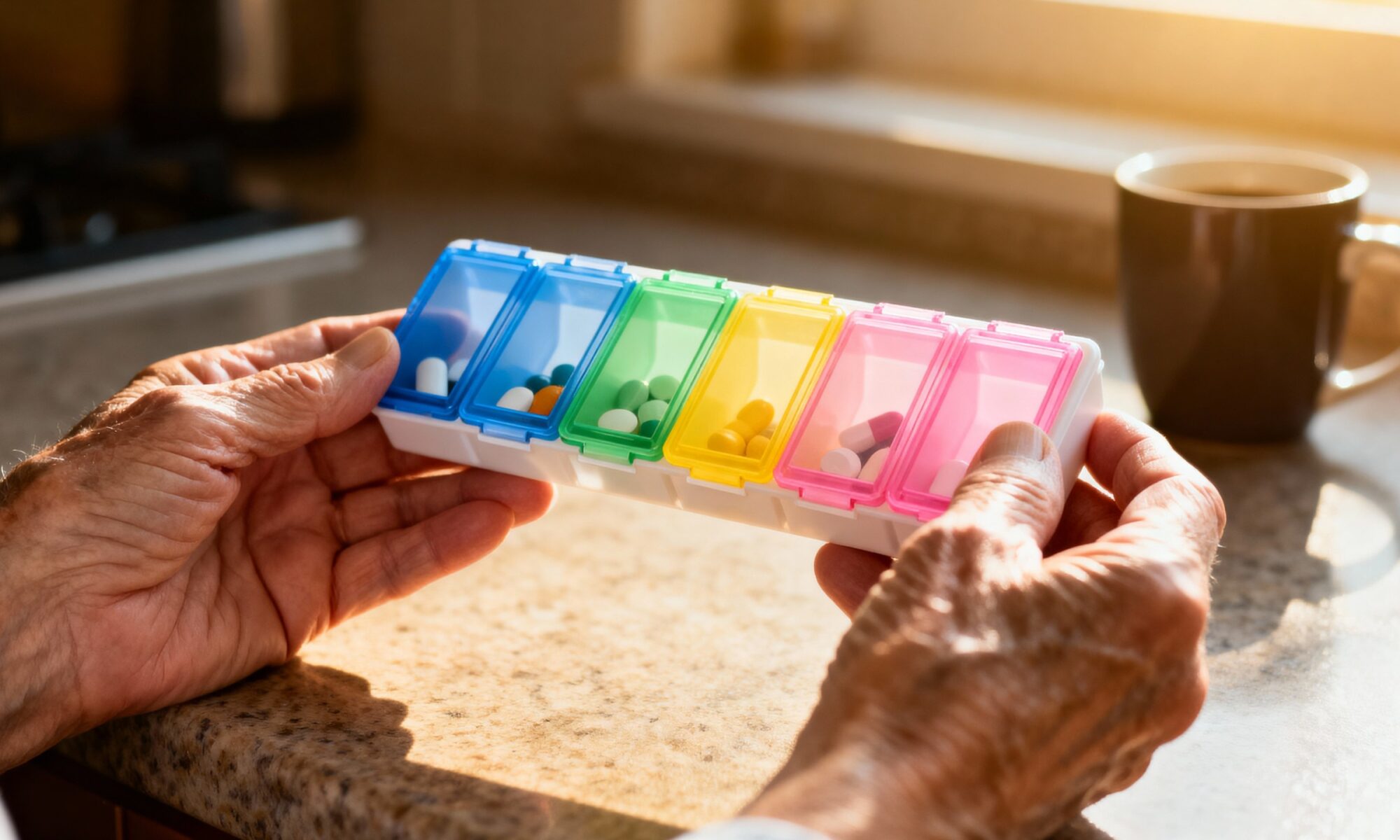
Pill organizers and dispensers make medication routines more accurate by providing a clear visual system for daily doses. The most traditional method is often the most effective. A weekly pill organizer is a simple visual way to ensure medications are taken at the right time. For seniors taking pills multiple times a day, look for organizers with separate compartments for morning, noon, evening, and bedtime.
When selecting an organizer, consider your loved one’s physical abilities. Arthritis can make opening small, tight lids difficult, so opt for easy-open containers.
- Set a specific time – Fill the organizer at the same time every week to create a habit.
- Use color-coding – Use different colors for different times of day to reduce confusion.
- Confirm visually – The clear compartments allow you to instantly verify if a dose was taken or missed without having to ask.
How Can Technology Be Used to Remind Seniors to Take Medications?
Technology supports medication adherence by providing alerts, alarms, and automated dispensing systems. For seniors who experience memory issues, relying solely on pillboxes might not be enough. Technology can bridge the gap by providing audible and visual cues. This can range from simple solutions like setting an alarm on a mobile phone or a digital clock to more advanced options like dedicated medication organization apps.
For those requiring more assistance, automated pill dispensers are a game-changer. These devices lock away medication and only dispense the correct dose at the scheduled time, usually accompanied by a loud alarm or flashing light.
- Smartphone apps – Apps like Medisafe can send notifications to both you and your loved one if a dose is missed.
- Smart speakers – Devices like Amazon Echo or Google Home can be programmed to make voice announcements like “It’s 8:00 a.m. Time to take your heart medication.”
- Vibrating watches – Simple wrist alarms can provide discreet reminders for those who are hard of hearing.
Assisting with medication organization can be a challenging task for overworked caregivers. Whether you need respite from your caregiving duties or your aging loved one needs live-in care in Libertyville, Assisting Hands Home Care can meet your family’s care needs. Our dedicated caregivers are available around the clock to provide transportation to doctor’s appointments, ensure seniors take their prescribed medications, and help with a variety of tasks in and outside the home.
Why Is Keeping a Detailed Medication List Important for Safety?
Maintaining a complete medication list increases safety by preventing interactions and ensuring accurate communication with healthcare providers. One of the most critical safety measures is keeping a master list of all current medications. This list should be easily accessible and updated immediately whenever a prescription changes. It serves as a vital resource during doctor visits, hospitalizations, or emergencies.
This record should include prescription drugs, over-the-counter medications, vitamins, and herbal supplements, as even natural supplements can interact negatively with prescribed drugs.
- Details – List the brand and generic name, dosage, frequency, and the reason for taking the medication.
- Prescriber information – Include the name and contact number of the doctor who prescribed each item.
- Accessibility – Keep a copy on the refrigerator and another in your loved one’s wallet or purse.
If your senior loved one has been diagnosed with a serious condition and needs help with tasks like meal prep, transportation, medication reminders, bathing, and grooming, reach out to Assisting Hands Home Care, a leading provider of Libertyville home care. We also offer comprehensive care for seniors with dementia, Alzheimer’s, and Parkinson’s.
How Does Using One Pharmacy Prevent Dangerous Drug Interactions?
Using a single pharmacy reduces the risk of interactions because the pharmacist can monitor the entire medication profile. Using multiple pharmacies to fill prescriptions can lead to fragmented care. When one pharmacist handles all of your loved one’s medications, he or she has a complete picture of your loved one’s health profile. This allows the pharmacist to screen for potential drug interactions doctors might miss if they aren’t aware of prescriptions from other specialists.
Many pharmacies now offer services specifically designed to help seniors manage their regimens:
- Blister packing – Ask if the pharmacy offers multidose packaging, where they presort medications into sealed blister packs labeled by date and time.
- Medication synchronization – This program aligns all refills to be due on the same day each month, reducing the number of trips to the pharmacy.
- Brown bag reviews – Once a year, take all medication bottles to the pharmacist for a review to identify expired or unnecessary drugs.
What Are the Best Practices for Safe Medication Storage and Disposal?
Correct storage and disposal keep medications effective and prevent accidental misuse or harm. Proper storage is often overlooked but is vital for maintaining the potency of medication. While the bathroom medicine cabinet is a common storage spot, the heat and humidity from showers can actually degrade pills and capsules. Medications should generally be kept in a cool, dry place away from direct sunlight.
Regularly auditing the medicine cabinet is equally important to prevent the accidental consumption of unsafe drugs.
- Check expiration dates – Medications lose effectiveness over time. Discard anything past its prime.
- Dispose safely – Don’t flush pills down the toilet unless the label specifically says to. Instead, look for local drug take-back programs or mix the pills with unappealing substances like coffee grounds before throwing them in the trash.
- Store securely – If there are children or pets in the home, or if your loved one has cognitive impairment, keep medications in a locked drawer or high cabinet.
For some families, caring for a senior loved one can be overwhelming at times. Luckily, Libertyville families can rely on exceptional respite care provided by the experienced professionals from Assisting Hands Home Care. We are a trusted name in respite and hourly care, and our caregivers are available around the clock to assist seniors with bathing, transportation, medication reminders, exercise, and much more, allowing families the time they need to focus on other important responsibilities or just take a break. Trust Assisting Hands Home Care to provide high-quality compassionate professional care for your loved one. If your loved one needs help with the challenges of aging, call one of our compassionate Care Specialists today.
Frequently Asked Questions
What are medication reminder services in home care?
+
Medication reminder services ensure clients take their medications on time and as prescribed, preventing missed doses or errors.
Who can benefit from medication reminders?
+
Anyone who has difficulty managing multiple medications, including seniors and individuals with chronic conditions, can benefit from this service.
Are caregivers allowed to administer medications?
+
Caregivers typically provide reminders and assistance but don’t administer medications unless they’re licensed to do so.
How are medication schedules managed in home care?
+
Caregivers use personalized schedules and tools like pill organizers or alarms to ensure medications are taken correctly and on time.
Can medication reminders be combined with other home care services?
+
Yes, medication reminders are often part of a broader care plan that includes daily living assistance and companionship.