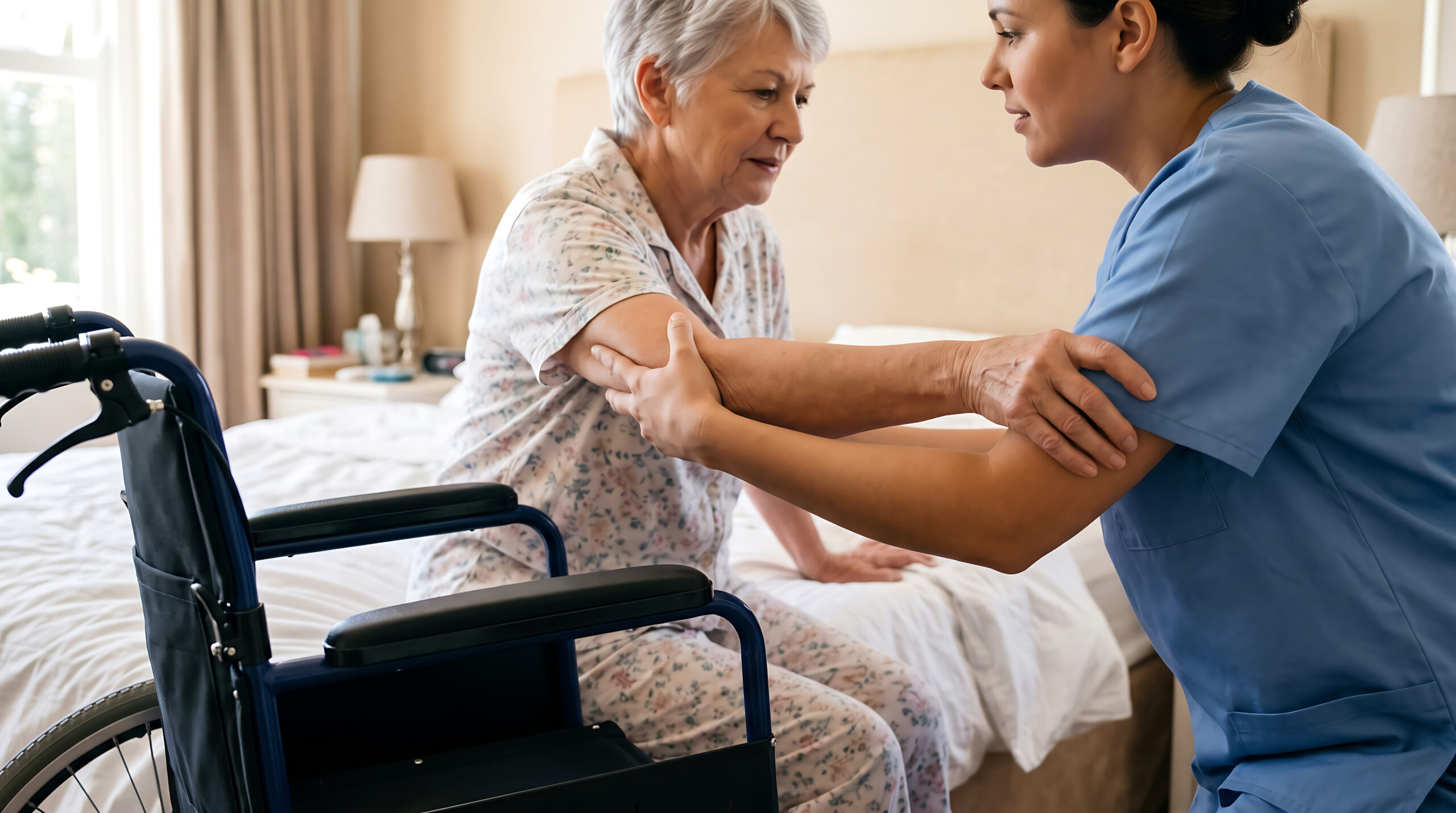
In-home care provides personalized assistance that helps seniors with mobility challenges maintain their independence while staying safe and comfortable in their own homes. Professional caregivers offer support with daily activities, fall prevention, and specialized mobility assistance tailored to each individual’s needs. This type of care allows older adults to age in place while receiving the help they need to navigate their daily routines.
What Types of Mobility Assistance Do In-Home Caregivers Provide?
In-home caregivers offer comprehensive mobility support that addresses the specific challenges seniors face. Their assistance includes:
- Transfer support – Help moving from bed to wheelchair, wheelchair to toilet, or chair to standing position
- Walking assistance – Steady support while using walkers, canes, or other mobility aids
- Stair navigation – Guidance and physical support when climbing or descending stairs
- Exercise support – Assistance with physical therapy exercises or gentle stretching routines
- Positioning help – Regular repositioning to prevent bedsores and maintain comfort
Caregivers are trained to use proper lifting techniques and body mechanics to ensure both the senior’s safety and their own.
How Does In-Home Care Prevent Falls?
Falls are a leading cause of injury among seniors with mobility issues, but in-home caregivers implement multiple strategies to reduce this risk. They conduct home safety assessments to identify hazards like loose rugs, poor lighting, or cluttered walkways. Caregivers also ensure mobility aids are within easy reach and in good working condition.
Beyond environmental modifications, caregivers provide hands-on support during high-risk activities such as bathing, toileting, and navigating stairs. They can also monitor medication schedules, as some prescriptions may cause dizziness or balance issues. This vigilant approach significantly reduces fall risk while giving families peace of mind.
If you’re the primary family caregiver for an elderly loved one in the suburban Chicago area, 24-hour care for Libertyville seniors is available around the clock if your loved one’s health has become too difficult to manage without professional expertise. At Assisting Hands Home Care, we take measures to help seniors prevent illness and injury by assisting with exercise and mobility, preparing nutritious meals, helping with bathing and other personal hygiene tasks, and much more.
Can In-Home Caregivers Assist with Mobility Devices?
Yes, professional in-home caregivers are trained to help seniors use various types of mobility devices safely. This includes:
- Wheelchairs and scooters – Assistance with transfers, navigation, and basic maintenance
- Walkers and canes – Proper positioning and support during use
- Bathroom safety equipment – Support using grab bars, shower chairs, and raised toilet seats
Caregivers work closely with physical therapists and medical professionals to ensure equipment is used correctly and adjusted properly for maximum safety and comfort.
What Daily Living Activities Can In-Home Care Help With?
Mobility limitations often make routine tasks challenging or impossible without assistance. In-home caregivers provide support with essential daily activities, including:
- Personal hygiene – Bathing, grooming, dressing, and toileting
- Meal preparation – Cooking nutritious meals and assisting with eating if needed
- Household tasks – Light cleaning, laundry, and organizing living spaces
- Medication organization – Reminders to take prescribed medications
- Transportation – Accompaniment to medical appointments or social activities
This comprehensive support enables seniors to maintain their dignity and quality of life while staying in familiar surroundings.
The need for assistance with daily activities becomes even greater if a senior with limited mobility is also experiencing cognitive decline due to dementia. There are a variety of reasons to consider professional dementia care for your loved one in Libertyville. Dementia caregivers are available 24/7 to help seniors maintain better cognitive health, and they can also assist with various tasks like medication reminders, transportation to medical appointments, and nutritious meal preparation.
How Is In-Home Care Customized for Individual Mobility Needs?
Every senior has unique mobility challenges, and in-home care plans are tailored accordingly. Care agencies conduct thorough assessments to understand each person’s specific limitations, medical conditions, and personal preferences. Based on these evaluations, they create customized care schedules that may range from a few hours per week to around-the-clock support.
Caregivers are matched with clients based on experience level and specialized training. For example, someone recovering from a stroke may need a caregiver experienced in post-stroke rehabilitation, while someone with advanced arthritis might benefit from a caregiver skilled in gentle mobility techniques. Care plans are regularly reviewed and adjusted as needs change over time.
Home care Libertyville experts are available to provide high-quality care to seniors on an as-needed basis. From assistance with mobility and exercise to providing transportation to the doctor’s office and social events, there are a variety of ways professional caregivers can help your aging loved one continue to live independently. Assisting Hands Home Care will work with you to customize a care plan that’s just right for your loved one’s needs. Call us today to discuss how we can give you the peace of mind that comes from knowing your loved one is being cared for with professionalism and compassion.
Frequently Asked Questions
How much does in-home care for mobility issues cost?
+
Costs vary based on location, level of care needed, and hours of service, typically ranging from $20 to $35 per hour. Many insurance plans, including some Medicare Advantage plans and long-term care insurance, may cover portions of in-home care.
Do in-home caregivers need special training for mobility assistance?
+
Yes, professional caregivers receive training in safe transfer techniques, fall prevention, mobility device use, and recognizing signs of decreasing mobility. Many also have certifications in areas like CPR and first aid.
Can in-home care help seniors avoid nursing home placement?
+
Absolutely. With proper support, many seniors with mobility issues can safely age in place. In-home care provides the assistance needed to maintain independence while staying in a familiar environment.
What’s the difference between in-home care and home health care for mobility issues?
+
Home health care involves skilled medical services provided by licensed nurses or therapists, often following hospitalization. In-home care focuses on nonmedical assistance with daily activities and mobility support, though caregivers sometimes work alongside medical professionals.
How quickly can in-home care services start?
+
Many agencies can begin services within 24 to 48 hours after an initial assessment, though this varies by location and availability. Emergency or rush placements may be possible in urgent situations.